


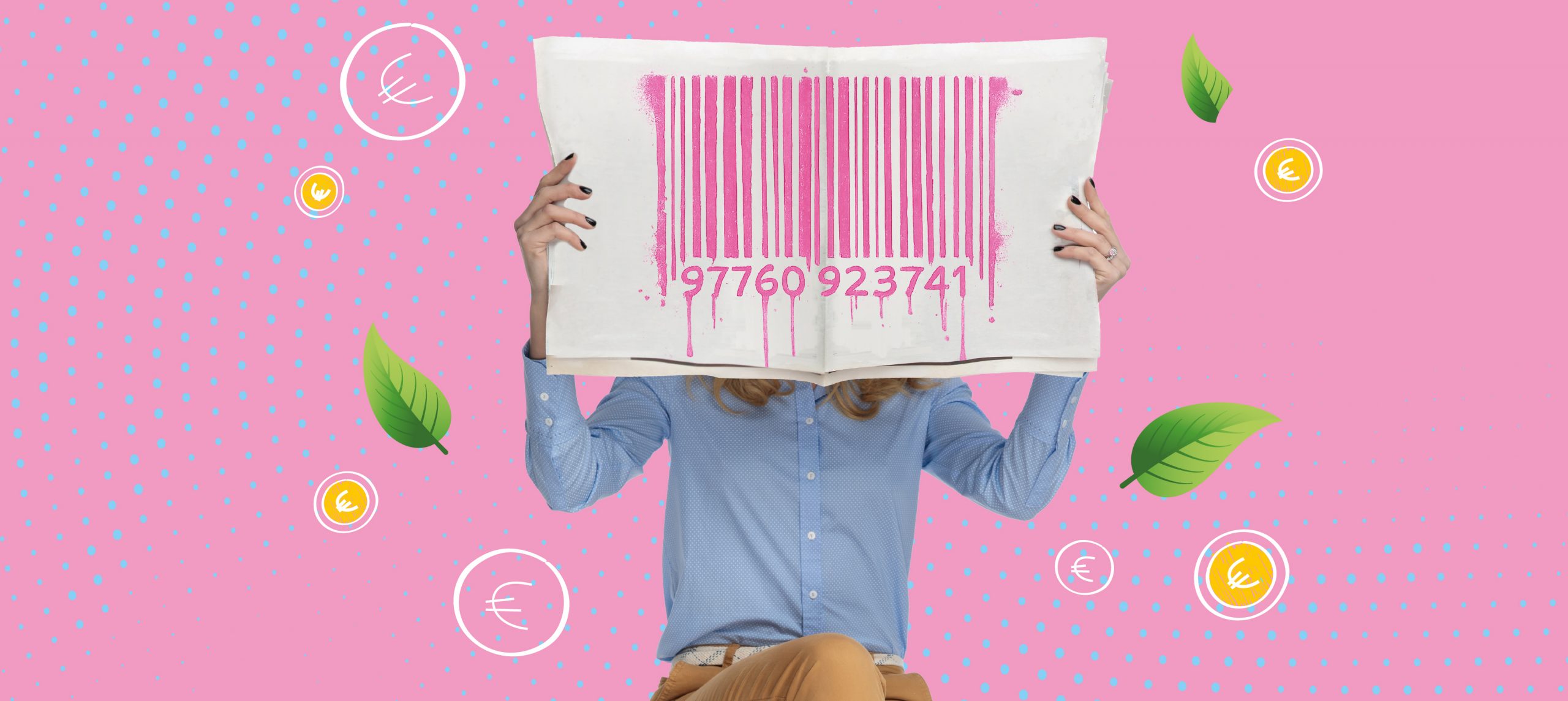
When discussing economics and consumption, attention is often focused on companies, markets, and technology. Much less often does it turn to those who make most purchasing decisions in everyday life.
Yet it should not be underestimated that a significant share of consumption is driven by women: from managing household grocery shopping to making choices related to sustainability, quality, and product durability.
The interesting point is that this is not only about what people buy, but also how they consume, and it is slowly changing the rules of the market.
Women are increasingly influencing purchasing decisions
For a long time, women’s role in consumption was portrayed through superficial stereotypes: impulsive shopping, fashion, or spending considered “non-essential.”
In reality, as highlighted by a 2022 survey conducted by the Museum of Saving, Parents and children: how much does the family matter in the new generations’ approach to money?, the number of women serving as the main reference point in families’ day-to-day economic decisions is growing.
The survey results show that women generally display a stronger tendency than men to monitor household spending, think in terms of saving, and above all plan the use of available financial resources.
This means that women’s choices influence food consumption, household management, energy use, family products, and sustainable purchases.
It is not simply a matter of “buying,” but of actively shaping consumption patterns.
More conscious consumption and attention to sustainability
One of the most interesting aspects concerns the relationship between women and sustainability.
As reported in an in-depth article by EconomiaCircolare.com on the role of women in the circular economy, numerous studies show that women tend, on average, to be more sensitive to environmental issues, reuse, waste reduction, and sustainable consumption models.
It is also worth remembering that it was a woman, Ellen MacArthur, former British sailor and founder of the Ellen MacArthur Foundation, who was responsible for the contemporary revival of the circular economy movement worldwide.
The circular economy aims to reduce waste and reuse materials and resources instead of following the traditional “produce-consume-dispose” model.
This focus on durability, reuse, and quality is also influencing the market:
- growth of the second-hand sector
- greater attention to production supply chains
- wider adoption of reusable products
- growing interest in less impulsive consumption
In practice, many “green” choices are becoming economic and cultural choices as well.
The market is noticing it too
For years, marketing concentrated much of its attention on younger consumers, often treating female audiences in a stereotypical way or limiting them to sectors such as beauty and fashion. Today, however, something is changing.
An analysis by Mark Up highlights how companies are reassessing, in particular, women over 50, who are increasingly considered central to economic decisions and everyday consumption.
According to the data reported in the article, women manage a huge share of global spending and influence not only household purchases but also sectors traditionally considered “male,” such as technology, automotive, and financial services.
The most interesting change, however, concerns the way they consume. Women over 50 are described as more conscious consumers, less impulsive, more attentive to quality and durability, and more interested in the real value of products than in the latest trends.
This is pushing many companies to rethink their language, advertising, and commercial strategies.
Mark Up also underlines another important point: this demographic was often ignored by traditional communication despite having very high spending power. The very foundation of the market is changing, placing more mature consumers at its center, consumers who are less volatile, more predictable in their behavior, and more consistent over time. As a result, the greater presence of women over 50 in advertising, for example, is not an isolated phenomenon but rather a sign of a shift that has already taken place in consumption patterns. In many cases, mature women are the real drivers of household consumption, influencing purchases for children, grandchildren, and partners, in addition to their own personal decisions.
The article therefore illustrates a broader transformation: female consumption is no longer seen merely as a market segment, but as a force capable of shaping economic trends, sustainability, and purchasing models.
Consumption trends “for girls”
Many consumption trends that are now considered innovative or sustainable actually stem from behaviors that for years were associated primarily with female audiences, often in a superficial or underestimated way.
Second-hand shopping, conscious skincare, capsule wardrobes, vintage shopping, attention to ingredients, creative reuse, home care, and personal budget organization are all examples of practices that now influence global markets and social media.
What was long dismissed as a “girl thing” has now become a genuine economic model capable of influencing consumption and business strategies while appealing to a much broader audience.
The success of platforms dedicated to resale and second-hand goods also demonstrates this shift: buying used items is no longer perceived merely as an economical choice, but as a combination of sustainability, personal style, and smarter money management.
This approach reflects a different logic from traditional impulsive consumption:
- buying less but buying better
- valuing durability
- personalizing rather than accumulating
- turning consumption into a more identity-driven and conscious choice
Many companies are adapting to these new behaviors by rethinking products, communication, and sales models to reach consumers who are increasingly concerned not only with price, but also with quality, transparency, and the social impact of products.
For a long time, consumption was portrayed as something superficial or automatic. Today, however, it is increasingly becoming a space worthy of analysis, where economics, sustainability, and cultural choices intersect.
In this transformation, women are taking on an increasingly central role: not only as consumers, but as people who consciously influence priorities, habits, and everyday economic models.
It is a quiet change, but one that is already very real.
To avoid falling behind, invest in building financial education skills that will help you manage your money consciously: take part in the in-person and online activities of the Museum of Saving, follow our blog, and browse the many publications available on our website www.museodelrisparmio.it.
20 May 2026