

Many young people wonder whether living alone is financially sustainable. On the one hand, there is the desire for independence; on the other, the weight of everyday expenses. Real data, however, help us understand how and to what extent lifestyle choices affect our personal finances.
What the data say: the cost of living alone
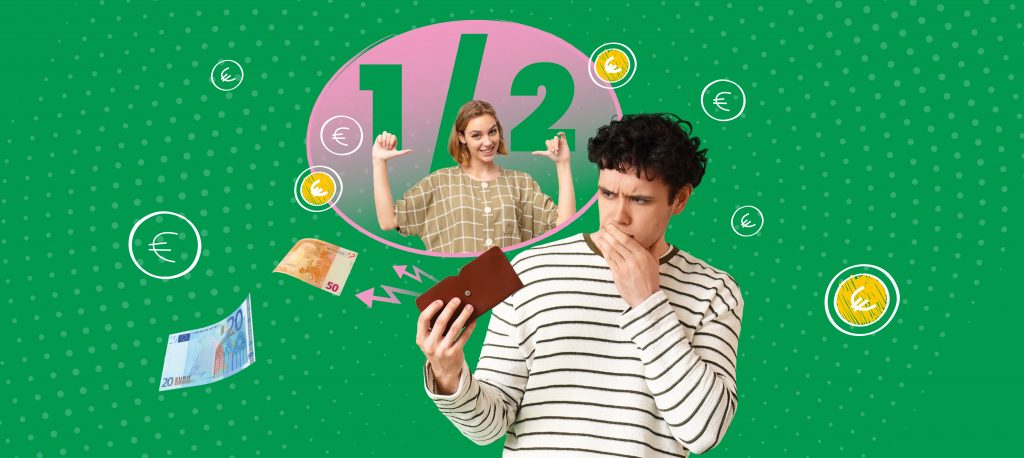
According to an analysis by Coldiretti based on data from Istat, for the 8.8 million people living alone in Italy, life costs about 40% more than for those living as a couple, and up to 80% more than for a three-person household.
A single person spends on average €337 per month on food and beverages, while per capita spending for couples is €266 and drops to €220 in a three-person household.
What impacts the budget of those living alone the most
People who live alone face many expenses they cannot share:
- Coldiretti reports that housing and utility costs weigh over 60% more for a single person than for a couple and almost 156% more compared to the per capita cost of a three-person family.
- Food expenses can be up to 60% higher for a single person compared to a couple. Without the responsibility of cooking for others, singles often opt for ready-made meals, which are more expensive, especially in single-serving formats.
When living alone, many fixed costs cannot simply be halved; therefore, rent or mortgage payments, household utilities, insurance, and digital services weigh entirely on one person’s budget.
Why these numbers matter
If the main reason for the difference lies in indivisible expenses, out-of-home consumption also highlights the gap: about €100 per month for restaurants and hotels compared to €71 per person for couples. Even transport and healthcare are more expensive, with increases of 6% and 15% respectively.
The picture is clear: being single means facing a hidden cost that weighs almost as much as rent. This is a growing phenomenon that raises questions in a country where single-person households are expected to increase. In an article, Corriere della Sera reports that by 2050, 41% of households will consist of a single individual.
A new global market
The growth in the number of people living alone is not only an Italian phenomenon but a global trend with significant economic effects. According to an in-depth report by Agenzia ICE, in countries such as Japan, single-person households account for an increasingly large share of the population: in 2020, about 38% of Japanese households consisted of one person, a percentage that exceeds 50% in major cities such as Tokyo. This transformation has direct effects on consumption and economic models, giving rise to services and products specifically designed for those living alone, from dining options to more compact housing solutions. The Japanese case shows how the increase in single-person households reshapes both markets and spending behaviors, highlighting how living alone entails higher per capita costs and makes individual financial planning even more crucial.
It’s not just about costs
Analyzing single versus couple life through data alone naturally provides a perspective limited to the economic aspect. Living alone also offers non-monetary advantages, such as greater autonomy in decision-making, flexibility in mobility, and the ability to plan one’s life without immediate compromises.
Therefore, even if single life may cost more due to the inability to share certain expenses, this does not automatically mean that living alone is financially unsustainable. Careful personal budgeting, expense monitoring, and building an emergency fund can help individuals live independently with peace of mind.
Being single should not be seen as an economic burden; however, it requires even more careful financial planning, closely linked to income and personal life priorities. The figures presented here should serve as an invitation to reflect carefully on one’s financial situation in order to make informed decisions and build a sustainable life plan.
Discover more content dedicated to conscious money management on the blog of the Museum of Saving. Take part in our events, workshops, and educational programs designed to support young people, adults, families, and schools in building solid foundations for their future. Visit www.museodelrisparmio.it.
February 11, 2026