


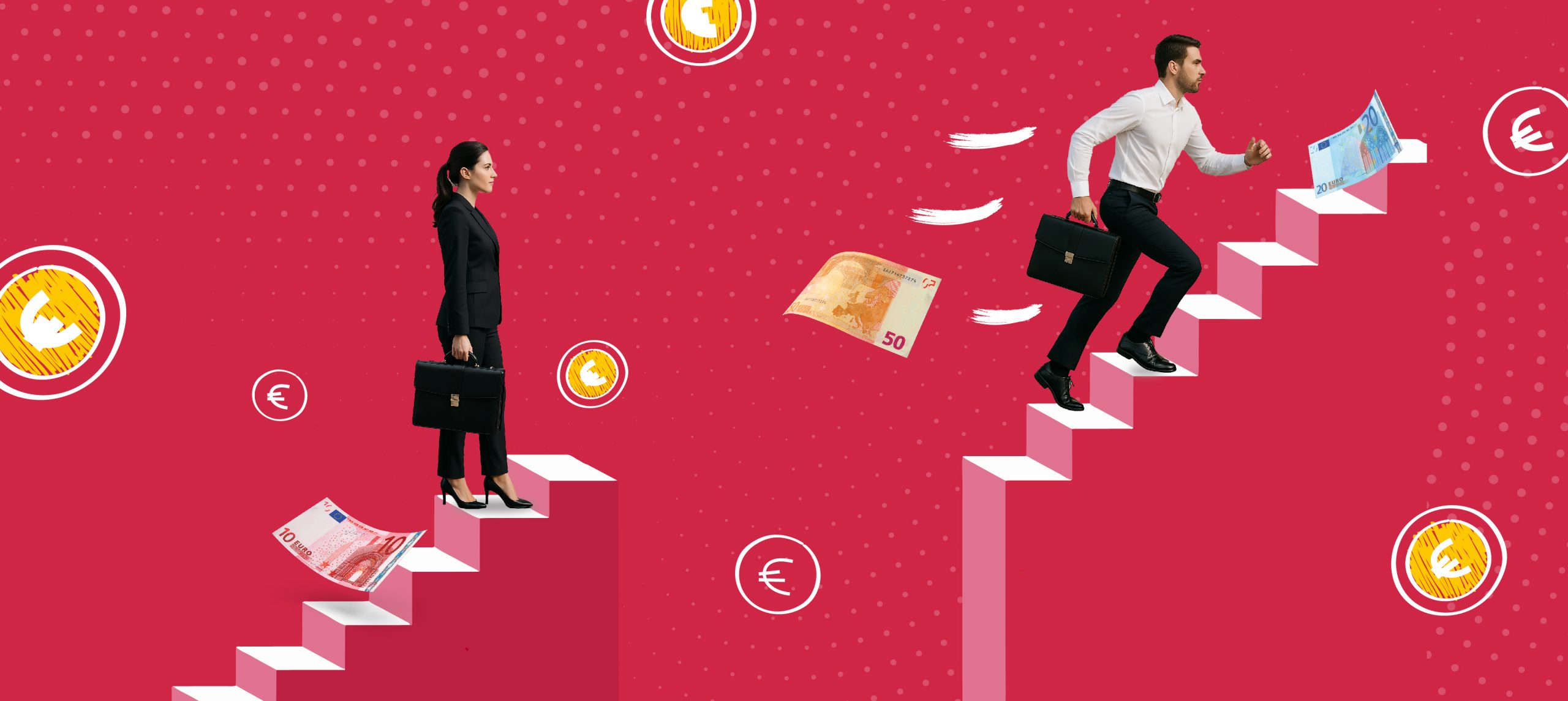
Access to credit is a crucial junction for economic growth, entrepreneurship, and individual autonomy. However, numerous pieces of evidence indicate that, even with equal merit, women continue to face greater obstacles than men, due to gender bias in credit, which persists globally. Confirming this is an analysis by the Centre for Economic Policy Research (CEPR), a European research institute that for over forty years has promoted cutting-edge studies in the field of economic policy. By analyzing data published by the World Bank Enterprise Surveys for the period 2008–2023, CEPR examined the impact of gender bias in access to credit on a global scale.
According to the study, which focuses on 61 countries, women-led businesses receive on average 39% less financing than those managed by men, a disparity that rises to 54% in countries characterized by stricter social norms. Yet, these same women-led businesses show an average return on capital 14.7% higher, clear evidence of a misallocation of resources linked to gender bias.
The gender gap in credit in italy
The phenomenon is also evident in Italy. According to some data prepared by FABI (Federazione Autonoma Bancari Italiani – Italian Autonomous Federation of Bank Workers), updated to September 2024, women are granted only 20.3% of the total bank loans to households, compared to 35.8% destined for men. A sharp gap, which translates into a difference of about 68 billion euros out of a total of 472 billion.
The gap is confirmed across all Italian regions, though with some variations. In the North-West and North-East, for example, women receive 19.6% of loans, while men receive 34.6%; in the Center the female share rises to 22.3% against 33.7% for men. The lowest percentages are recorded in the South, where women access 18% of loans, while in the Islands the share rises to 20.3%, compared with a male average between 34.2% and 35.8%.
This imbalance reflects a broader inequality that links the world of work and private life: women’s employment is often part-time, with lower wages and smaller personal assets, corresponding to strongly limited access to credit.
Beyond the numbers: how to address gender bias in finance
Gender bias in credit is not only an economic issue: it is rooted in cultural and social barriers that are still deeply ingrained. Among the main causes are gender stereotypes, discontinuous work patterns, and limited access to professional and informational networks. This combination of factors strongly penalizes women, limiting or preventing for many of them proper economic growth.
Furthermore, the difficulty of accessing credit, which for some may mean the impossibility of having their own resources to manage independently, can lead to more or less explicit forms of economic violence, when exclusion from control or availability of financial resources becomes a factor of dependence.
These dynamics, in addition to penalizing individual women, generate systemic imbalances: capable and profitable businesses do not access the financing they need, with a consequent misallocation of capital that slows growth, innovation, and competitiveness.
To reverse this trend, concrete tools and cultural change are needed. On the one hand, public policies and inclusive banking solutions; on the other, financial education and training to strengthen women’s awareness and economic autonomy.
Also on this front, the Museum of Saving has always been active with dedicated projects and programs that address the link between finance, empowerment, and gender equality, from modules on women’s economic independence to workshops for entrepreneurs and third-sector workers: so that merit really counts and does not remain only a theoretical principle.
July 9, 2025