


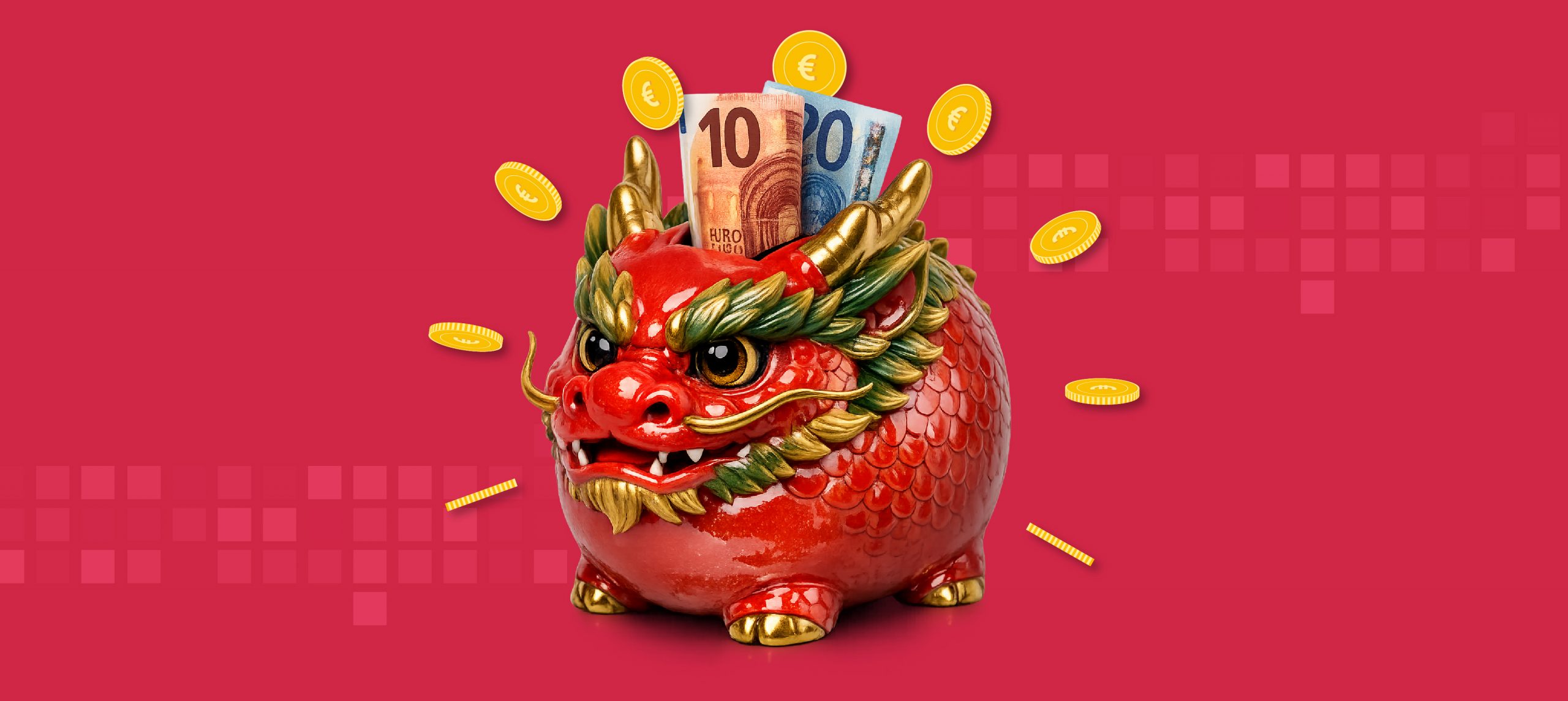
The Lunar New Year, also known as the Spring Festival and celebrated in many East Asian countries, does not simply mark the beginning of a new year. It is also a time for reflection, planning, and careful attention to resources. Ancient traditions, symbols, and everyday practices that may seem far removed from our own experience reveal an approach to money that can offer valuable insights for managing our finances.
Saving as responsibility toward the future
In Chinese culture, saving has historically been associated with family stability and security. According to an analysis by the World Bank, China has for decades recorded one of the highest savings rates in the world, linked not only to income levels but also to cultural traditions that place great importance on setting aside funds for future expenses such as education, healthcare, and family support.
Saving is not seen as a sacrifice, but rather as a form of intergenerational responsibility, allowing families to face unexpected events and support life transitions.
The meaning of “hongbao”: symbolic financial education
During the Lunar New Year, it is traditional to give hongbao (literally “red envelopes”) containing money. Beyond their economic value, the gesture carries strong educational meaning: money is associated with prosperity, good fortune, and positive wishes—outcomes that stem from responsible management.
As a monetary gift, red envelopes are usually given by older relatives to younger ones, especially children, school-age youth, and unmarried individuals. Rather than coins, newly printed banknotes are placed inside the envelopes. These symbolize welcoming the new while casting away the old. For this reason, bank withdrawals increase significantly in the period leading up to the Spring Festival.
Saving and planning
The period preceding the Lunar New Year is traditionally devoted to “putting things in order”: homes are cleaned, debts are settled, and expenses for the coming year are planned. This approach reflects a mindset in which control over resources comes before consumption—a key principle we could all embrace.
Another important lesson concerns the link between saving and the efficient use of resources. In Chinese tradition, avoiding waste is considered an ethical value even before being an economic one—a principle that is increasingly central in today’s sustainability debate.
In 2025, Green Me reported on an unusual situation unfolding in China, where the waste disposal industry is facing difficulties because there is no longer enough waste to burn. Stricter separate waste collection regulations introduced in 2017 and recycling policies are producing tangible results. For example, Shenzhen, a megacity of 18 million people, has become a virtuous example: zero household waste ends up in landfills. This demonstrates that a more sustainable model is possible.
What we can learn today
The Lunar New Year reminds us that saving cannot remain an isolated goal or a box to tick among our “New Year’s resolutions.” It must be part of a broader vision that combines planning, responsibility, and attention to the future. In an uncertain economic context—especially for young people—these principles need to be translated into concrete actions: building an emergency fund, distinguishing between needs and wants, and planning realistic financial and life goals.
Integrating these practices into daily life means developing a more conscious relationship with money—one that supports personal choices, economic independence, and long-term well-being.
Discover more content dedicated to conscious money management and financial education on the blog of the Museum of Saving. Take part in our events, workshops, and educational programs designed to support youngsters, families, and schools in building solid foundations for their future. All materials are available at www.museodelrisparmio.it.
February 18, 2026